
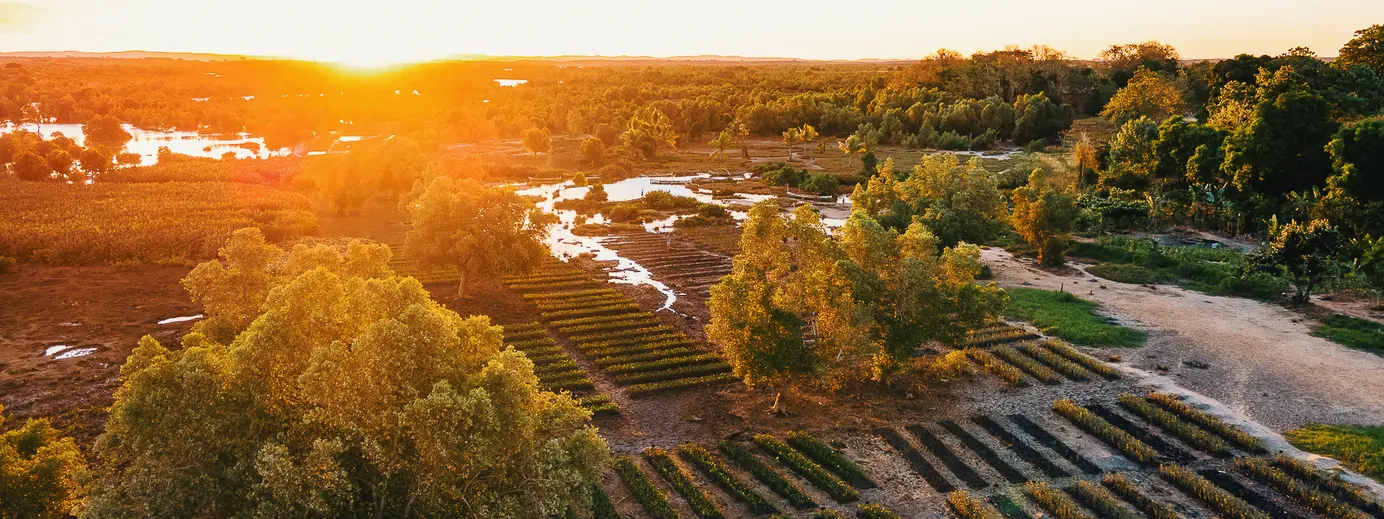
With the launch of the second phase of Ma Honko, Neya is expanding the project from its initial 500 hectares to nearly 2,500 hectares, strengthening its commitment to nature-based solutions for CO₂ removal and the protection of coastal ecosystems.
Neya, our benefit company dedicated to tackling climate change, is launching the second phase of the Ma Honko project in Madagascar, which aims to restore mangrove forests along the country’s coast. The company’s goal is to restore degraded ecosystems, improve biodiversity and remove carbon dioxide from the atmosphere, involving local communities.
Following the launch of the first phase in December 2025, the project is now entering a new stage of development. This will expand the area involved from 500 hectares – where mangrove restoration activities have been launched in degraded coastal areas of the Sofia and Melaky regions – to more than 2,400 hectares, extending the project to include northern Madagascar. Among the most effective ecosystems for carbon capture and storage, mangroves can lock up significant quantities of CO₂ in the biomass and coastal soils. Extending the scheme to 2,400 hectares, equivalent to 3,300 football pitches, will boost carbon capture and storage capacity in the affected areas, with an estimated total removal of approximately 755,000 tonnes of CO₂ over a twenty-year period. Alongside its climate impacts, Ma Honko will also help to protect against coastal erosion, support conservation of natural habitats and create economic opportunities for the communities involved through nurseries, replanting, fishing and apiculture.
Since Neya’s foundation, the first phase of the project has already restored 272 hectares, equal to over 54% of the initial target, through the planting of mangroves in the Sofia and Melaky regions. To support restoration activities, 847 nurseries have been created and almost 1.8 million trees have been planted. The project uses an approach based on tidal cycles. This allows the young plants to benefit from natural irrigation, enabling them to take root and grow.
In addition to its climate objectives, the project includes a strong biodiversity protection component: monitoring of the area has in fact confirmed the presence of threatened endemic species, including the Malagasy sacred ibis and the Madagascar heron, both classified as “Endangered” on the IUCN (International Union for Conservation of Nature) Red List. Carried out in collaboration with local partners, the restoration plan is developed in accordance with the requirements of the international Gold Standard.
The environmental benefits resulting from the initiative form part of the Mundys Group’s decarbonisation pathway and sustainability strategy. The project will contribute to meeting the targets set in the Group’s Climate Action Plan, one of the first to be adopted in the transport infrastructure sector. This promote the energy transition and the progressive decarbonisation of activities across the entire value chain, involving a commitment to eliminating net direct (Scope 1 and 2) emissions by 2040.
In keeping with the first phase, the project provides for the reinvestment of part of its economic benefits into local communities. The activities will involve people and workers from the affected areas, helping to boost skills and income opportunities.
Reforestation activity will continue throughout 2026 and 2027, with replanting due to take place over the year depending on local seasonal and weather conditions, until this new phase of the project has been completed.